
Introduction
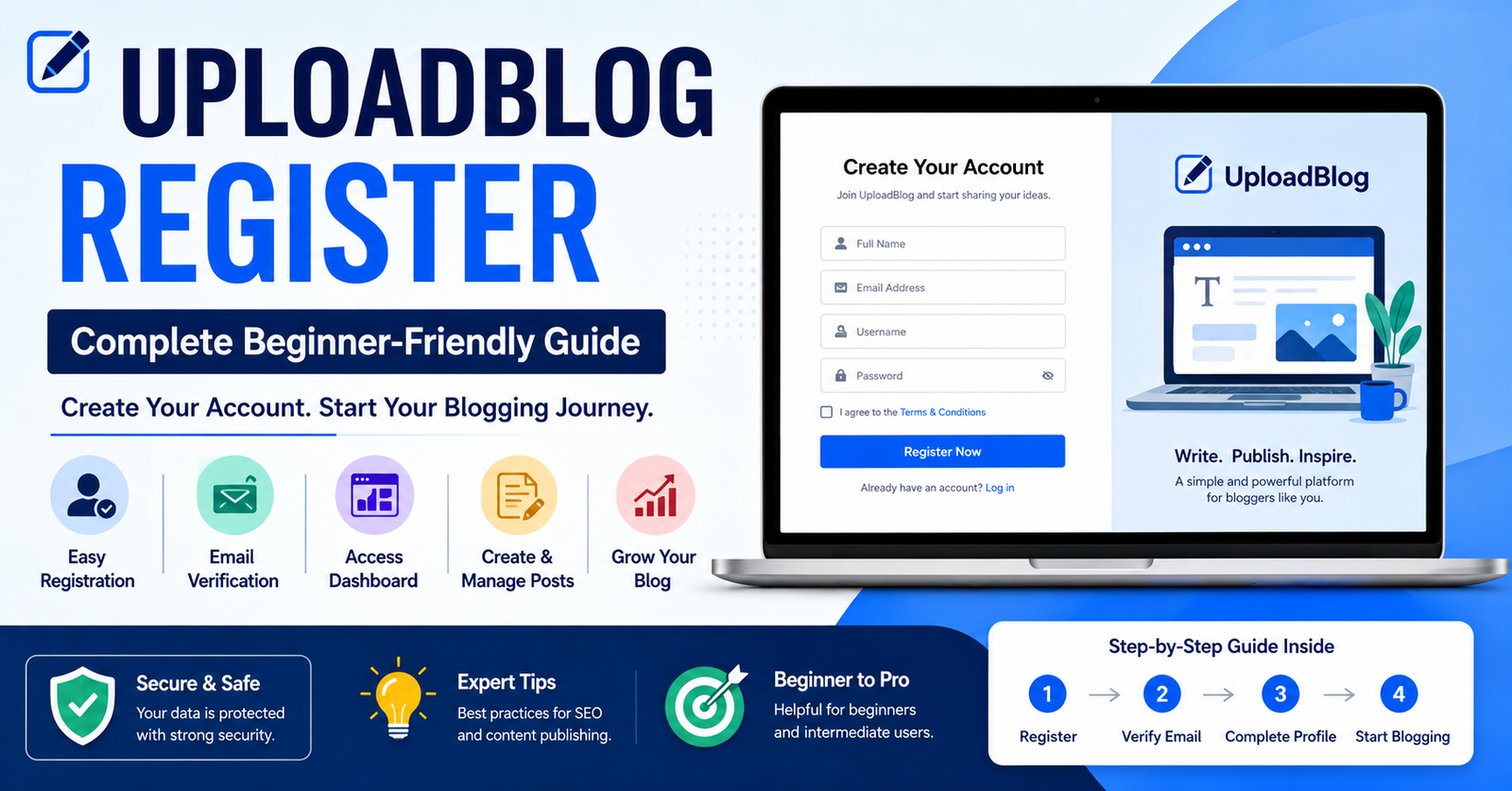
Uploadblog Register means creating an account on an UploadBlog-style blogging platform so you can access a dashboard, prepare content, manage posts, and publish blog articles more easily.
For beginners, the registration process is usually the first step toward starting a blog without dealing with complicated technical settings. Instead of worrying about coding, hosting confusion, or content organization, users can focus on writing useful posts, formatting them properly, and preparing them for readers.
Blogging is no longer only about publishing random thoughts online. Today, a blog can help people build authority, share knowledge, promote services, support SEO campaigns, and create a long-term digital presence. That is why understanding how registration works is important before you start uploading content.
This guide explains the topic in a simple and practical way. You will learn what the registration process means, why it matters, how it works, what mistakes to avoid, and how to improve your content for both Google SEO and AI search engines.
Whether you are a new blogger, student, freelancer, SEO learner, guest post provider, or small business owner, this article will help you understand the process clearly.
Uploadblog Register is useful for anyone who wants a simple and organized way to begin blogging.
With Uploadblog Register, beginners can create an account and manage their first blog post with more confidence.
The main advantage of Uploadblog Register is that it keeps your blogging process simple, clean, and easy to follow.
Before using Uploadblog Register, make sure your email address is active and your password is secure.
Uploadblog Register also helps users save time because they can manage drafts, profiles, and posts from one place.
For SEO learners, Uploadblog Register can be a good starting point for practicing content formatting and publishing.
When using Uploadblog Register, always review your article before publishing it live.
Uploadblog Register is best for beginners, freelance writers, students, bloggers, and small website owners.
A complete profile can make your Uploadblog Register account look more professional and trustworthy.
If you use Uploadblog Register correctly, you can build a smoother content publishing routine.
The best way to benefit from Uploadblog Register is to publish clear, original, and well-structured content.
Uploadblog Register should be used with proper SEO basics such as headings, meta descriptions, internal links, and optimized images.
Quick Answer
Uploadblog Register is the process of signing up for an UploadBlog-style platform by creating a user account with basic details such as your name, email address, and password. After registration, you can usually log in to a dashboard, complete your profile, create blog drafts, organize content, and prepare posts for publishing.
For more blogging and SEO learning, you can also read helpful resources from Google Search Central.
In simple words, it is the starting point for using the platform properly. A registered account helps you manage your content in one place, save drafts, edit posts, and build a more professional blogging workflow.
What is Uploadblog Register?
Uploadblog Register refers to the account creation process for users who want to access blogging tools, upload articles, and manage their content through an online platform.
The word “register” simply means signing up. When you register, you usually provide basic information, create login details, and confirm that you want to use the platform. Once your account is active, you can log in whenever you need to work on your blog content.
For example, a beginner may write an article in Google Docs first. After that, they can log in to their account, paste the article into the editor, add headings, choose categories, add tags, and prepare the post for publishing.
The main purpose of registration is to give every user a personal workspace. Without an account, it is difficult to save drafts, manage published posts, update profile details, or organize content properly.
A registered account may also help with trust. When your profile is complete, your blog posts look more professional to readers and site managers.
Why is Uploadblog Register Important?
Uploadblog Register is important because it gives users access to the platform’s main blogging features. Without registration, most users cannot manage drafts, publish content, update posts, or organize their work in a proper dashboard.
For beginners, this matters because blogging becomes easier when everything is arranged in one place. You do not need to keep separate files everywhere or remember which article is ready, which one needs editing, and which one has already been published.
For intermediate users, registration is also useful because it supports a better content workflow. If you publish regularly, a proper account helps you manage multiple posts, track content progress, and maintain a consistent publishing routine.
It is also important from an SEO point of view. A well-prepared blogging account allows you to add proper titles, descriptions, categories, tags, headings, and images. These elements can improve how your content is understood by search engines.
From a GEO point of view, clear account-based publishing helps AI tools understand your content better. When your content is structured, factual, and easy to summarize, AI search engines can extract useful answers from it more confidently.
How Does Uploadblog Register Work?

Uploadblog Register usually works through a simple sign-up process. The user visits the platform, clicks the register or sign-up option, enters basic details, creates a password, verifies the email if required, and then logs in to the dashboard.
The process may look slightly different depending on the platform design, but the basic idea is the same. You create an account first. Then you use that account to manage your content.
A common registration workflow looks like this:
- Visit the platform homepage.
- Find the register, sign-up, or create account button.
- Enter your name, email address, and password.
- Accept terms if required.
- Submit the form.
- Verify your email if the platform sends a confirmation link.
- Log in to your dashboard.
- Complete your profile.
- Start creating or uploading content.
After logging in, users can usually access content tools such as a post editor, draft section, profile settings, categories, tags, and publishing options.
Step-by-Step Guide
Step 1: Visit the Official Platform
Start by opening the official website in your browser. Always make sure the website address is correct before entering your personal information.
This is important because fake pages can sometimes copy the design of real platforms. Check the domain carefully and avoid clicking suspicious links from unknown messages.
Step 2: Click Register or Sign Up
Look for a button that says “Register,” “Sign Up,” “Create Account,” or something similar. This button is usually found in the top menu, homepage, or login section.
Once you click it, the platform will open a registration form.
Step 3: Enter Your Basic Details
Most registration forms ask for simple details such as:
| Field | Purpose |
|---|---|
| Name | Shows your identity or profile name |
| Used for login and account confirmation | |
| Password | Protects your account |
| Username | May be used as your public display name |
Use a valid email address because you may need it for verification, password recovery, and account updates.
Step 4: Create a Strong Password
A weak password can put your account at risk. Use a password that includes letters, numbers, and symbols.
Avoid using simple passwords such as your name, birthday, phone number, or “123456.” A strong password protects your drafts, published posts, and personal account settings.
Step 5: Verify Your Email
Some platforms send a confirmation email after registration. Open your inbox and look for the verification message.
If you do not see it, check your spam or promotions folder. After clicking the verification link, your account should become active.
Step 6: Log In to Your Dashboard
Once your account is verified, go back to the platform and log in using your email and password.
The dashboard is your main workspace. From there, you can create content, edit drafts, update your profile, and manage blog posts.
Step 7: Complete Your Profile
A complete profile makes your account look more trustworthy. Add your display name, short bio, profile picture, and niche information if the platform allows it.
For example, if you write about SEO, your bio may say:
“I write beginner-friendly guides about SEO, blogging, content marketing, and digital growth.”
This helps readers understand your expertise quickly.
Step 8: Prepare Your First Blog Post
Before publishing, prepare your content properly. Add a clear title, introduction, headings, short paragraphs, and useful examples.
You should also check grammar, readability, keyword usage, and formatting. A clean article performs better than a rushed article.
Step 9: Add Categories and Tags
Categories and tags help organize your content. For example, if your article is about blogging, the category could be “Blogging” and the tags could include “blog writing,” “content publishing,” and “SEO tips.”
Do not add too many tags. Use only relevant ones.
Step 10: Review and Publish
Before publishing, preview your post. Check headings, images, spacing, links, and spelling.
Once everything looks good, publish the article or save it as a draft if you want to review it later.
Benefits of Uploadblog Register
Uploadblog Register offers several practical benefits for beginners and intermediate bloggers.
1. Easy Content Management
A registered account gives you a central place to manage your posts. You can create drafts, edit old content, and organize articles without confusion.
2. Beginner-Friendly Setup
Most registration processes are simple. You do not need advanced technical knowledge to get started.
3. Better Blogging Workflow
A proper account helps you plan content, write posts, review drafts, and publish consistently.
4. Professional Profile
A complete profile can improve trust. Readers are more likely to trust content when they can see who created it.
5. SEO-Friendly Publishing
You can usually add titles, headings, tags, categories, and images. These elements support better search engine visibility.
6. Time Saving
Instead of managing everything manually, you can use the dashboard to keep your content organized.
7. Better Editing Control
You can update posts when information changes. This is useful for keeping your content fresh.
Disadvantages or Risks
Like any online platform, registration also has some possible risks.
1. Account Security Risk
If you use a weak password, your account may become vulnerable. Always use a strong password and avoid sharing login details.
2. Wrong Website Risk
Users may accidentally register on a fake or unofficial website. Always check the URL before signing up.
3. Email Verification Issues
Sometimes confirmation emails may go to spam. This can delay account activation.
4. Limited Platform Features
Some platforms may offer only basic publishing tools. Advanced users may need more features for custom design, analytics, or automation.
5. Content Quality Problems
Registration does not guarantee ranking. Your content still needs quality, structure, originality, and SEO optimization.
6. Overdependence on One Platform
If you publish only on one platform, your content strategy may become limited. It is better to keep backup copies of your articles.
Common Mistakes to Avoid
Using a Weak Password
Never use simple passwords. A strong password protects your work and account.
Skipping Profile Setup
An incomplete profile looks less professional. Add a proper bio and display name.
Publishing Without Editing
Do not publish your article immediately after writing. Read it again, fix mistakes, and improve formatting.
Keyword Stuffing
Using the same keyword too many times can hurt readability. Use keywords naturally.
Ignoring Headings
Headings help readers and search engines understand your content. Use H2 and H3 headings properly.
Not Adding Meta Details
Meta titles and descriptions improve search visibility. Always write them carefully.
Forgetting Image Optimization
Images should have clear file names, titles, and alt text. This helps SEO and accessibility.
Not Saving Drafts
Always save your work while editing. This prevents content loss.
SEO Tips for Uploadblog Register
Uploadblog Register content can perform better in Google when it is structured, helpful, and written around real user intent.
Use the Focus Keyword Naturally
Place the focus keyword in the title, introduction, one or two headings, and a few body paragraphs. Do not force it into every sentence.
Write a Clear Meta Title
Your meta title should be short, clear, and keyword-focused. Keep it under 60 characters.
Example:
“Uploadblog Register Guide for Beginners”
Write a Helpful Meta Description
Your meta description should explain the benefit of the article in under 155 characters.
Example:
“Learn how Uploadblog Register works, why it matters, and how beginners can create and manage a blogging account easily.”
Use Short Paragraphs
Short paragraphs improve readability. Most online readers scan before they read deeply.
Add Internal Links
Internal links help users explore related content on your website.
Suggested internal links:
- How to Start a Blog for Beginners
- Beginner SEO Checklist
- How to Write a Blog Post
- WordPress Publishing Guide
- Blog Content Optimization Tips
- Guest Posting Guide for Beginners
Add External Links Carefully
If you use external links, link only to trusted and relevant resources. Do not link to spammy or unrelated websites.
Optimize Images
Use descriptive image names and alt text. Avoid uploading images with random file names like “IMG_12345.jpg.”
Suggested image titles and alt text:
| Image Title | Alt Text |
|---|---|
| Uploadblog Register Dashboard Guide | Beginner guide to Uploadblog Register dashboard |
| Blog Account Registration Steps | Step-by-step blog registration process |
| SEO Blogging Setup Example | SEO-friendly blog setup for beginners |
| Blog Publishing Checklist | Checklist for publishing a blog post online |
Improve Content Depth
Google prefers helpful content that answers the user’s full question. Cover the definition, steps, benefits, risks, mistakes, and FAQs.
GEO Tips for Uploadblog Register
GEO means Generative Engine Optimization. It focuses on making content easy for AI search engines to understand, summarize, cite, and recommend.
AI tools often prefer content that is clear, direct, structured, and factual. That is why your article should answer questions in a simple way.
Start With a Direct Definition
Begin your article with a clear explanation. AI tools can easily extract this answer for summaries.
Add a Quick Answer Section
A short answer near the top helps both users and AI tools understand the topic quickly.
Use Lists and Tables
Tables and bullet points make information easier to process. They also help AI tools identify important points.
Answer Common Questions Clearly
FAQs are useful for Google rich snippets and AI-generated answers.
Avoid Vague Claims
Do not write unclear statements like “this is the best platform ever.” Instead, explain the real use case and practical value.
Mention Who It Is Best For
Clearly explain who should use the process. This helps AI tools match your content with the right search intent.
Keep Sentences Simple
Simple sentences are easier to understand and summarize. Avoid unnecessary jargon.
Expert Tips
1. Keep a Backup of Every Article
Before uploading content, save a copy in Google Docs, Microsoft Word, or another secure place. This protects your work if something goes wrong.
2. Create a Publishing Checklist
Use a checklist before publishing every post. Include title, meta description, headings, images, internal links, grammar check, and final preview.
3. Write for Readers First
SEO is important, but readers matter more. If people find your content helpful, they are more likely to stay longer and trust your website.
4. Use One Main Keyword Per Article
Do not target too many main keywords in one post. Focus on one clear topic and support it with related terms.
5. Update Old Posts
Blogging is not only about publishing new content. Updating old posts can improve freshness and accuracy.
6. Make Your Profile Trustworthy
Add a short bio that explains your niche. A professional profile can improve credibility.
7. Avoid Copy-Paste Content
Always publish original content. Duplicate content can reduce trust and hurt SEO performance.
8. Preview Before Publishing
A preview helps you catch formatting issues, broken spacing, missing images, and heading problems.
Key Facts
| Key Point | Simple Explanation |
|---|---|
| Main purpose | Create an account to manage blog content |
| Best for | Beginners, bloggers, students, freelancers, SEO learners |
| Main requirement | Valid email and strong password |
| Important step | Email verification if required |
| SEO value | Helps organize content with titles, headings, tags, and categories |
| GEO value | Supports clear, structured, AI-friendly content |
| Biggest risk | Weak passwords or using the wrong website |
| Best practice | Complete your profile and review posts before publishing |
Comparison Table
| Feature | Registered User | Non-Registered User |
|---|---|---|
| Access dashboard | Yes | Usually no |
| Save drafts | Yes | Usually no |
| Manage posts | Yes | Limited or unavailable |
| Edit profile | Yes | No |
| Publish content | Usually yes | Usually limited |
| Organize posts | Yes | No |
| Better workflow | Yes | No |
| Professional presence | Stronger | Weaker |
Who Is This Topic Best For?
This topic is best for beginners who want to start blogging in a simple way. It is also useful for intermediate users who publish content regularly and want a more organized workflow.
It is especially helpful for:
- New bloggers
- SEO learners
- Guest posting service providers
- Students learning digital publishing
- Freelance writers
- Small business owners
- Content marketers
- Website owners
If you want to manage blog content more professionally, understanding account registration is a smart first step.
Practical Example
Imagine you are a beginner who wants to publish an article about “SEO tips for small businesses.” Without an account, you may write the article somewhere else but have no clear place to manage it.
After registration, you can log in, create a draft, add your article, format headings, add tags, choose a category, upload an image, preview the post, and publish it.
This makes the process more organized and less stressful.
FAQs
1. What does Uploadblog Register mean?
It means creating an account on an UploadBlog-style platform so you can log in, access a dashboard, create posts, manage drafts, and prepare blog content for publishing.
2. Is registration difficult for beginners?
No, the process is usually simple. Most users only need to enter basic details such as name, email address, and password.
3. Do I need an email address to register?
Yes, most platforms require a valid email address. The email may be used for login, verification, password recovery, and account notifications.
4. Why should I complete my profile after registration?
A complete profile looks more professional. It can help readers understand who you are, what you write about, and why they should trust your content.
5. Can registration help with SEO?
Registration itself does not guarantee rankings, but it gives you access to tools that can help organize and optimize content. Proper titles, headings, tags, categories, and meta details can support SEO.
6. What should I do before publishing my first post?
Check your title, headings, grammar, formatting, images, internal links, meta description, and keyword placement. Preview the post before publishing.
7. Is keyword stuffing a problem?
Yes. Keyword stuffing makes content look unnatural and can hurt readability. Use your focus keyword naturally and support it with related terms.
8. How can I make my blog content GEO-friendly?
Use clear definitions, short answers, tables, FAQs, simple explanations, and factual points. This makes your content easier for AI search engines to understand and summarize.
9. What is the biggest mistake beginners make?
The biggest mistake is publishing too quickly without editing. A blog post should be reviewed for clarity, structure, grammar, SEO, and user value before it goes live.
10. Should I keep backup copies of my articles?
Yes. Always keep backups of your articles in a separate document. This protects your content if you lose access or need to reuse the draft later.
Conclusion
Uploadblog Register is the first step for users who want to create an account, access a blogging dashboard, manage posts, and publish content in a more organized way.
For beginners, it makes blogging easier because the process is usually simple and does not require advanced technical knowledge. For intermediate users, it supports a better workflow by helping them manage drafts, organize content, and maintain a professional profile.
However, registration is only the beginning. To get real value, you must write helpful content, use proper headings, optimize images, add meta details, avoid keyword stuffing, and keep your profile complete.
From an SEO perspective, a registered account helps you prepare content in a structured way. From a GEO perspective, clear and organized content is easier for AI search engines to understand, summarize, and recommend.
If you are starting your blogging journey, take the time to register carefully, secure your account, complete your profile, and publish content that genuinely helps readers. That is the best way to build trust, improve visibility, and create long-term value online.