
Introduction
A comic strip is one of the simplest yet most powerful forms of storytelling. It combines images and short text to create a story that is easy to understand and visually engaging. Comic strips are usually short, often appearing in newspapers, magazines, books, and digital platforms.
Despite their simple format, comic strips have played a major role in shaping modern visual storytelling. They are loved by children and adults alike because they are fun, quick to read, and often humorous or meaningful.
In this article, we will explore what comic strips are, their history, types, importance, and how they continue to evolve in the digital age.
What is a Comic Strip?
A comic strip is a sequence of drawings arranged in panels that tell a story. Each panel contains characters, dialogue, and actions that move the story forward.
Comic strips are usually short and focus on a single idea, joke, or situation. They can be funny, dramatic, educational, or even thought-provoking.
Most comic strips are published regularly in newspapers or online platforms. They are designed to be read quickly while still delivering a complete message.
History of Comic Strips
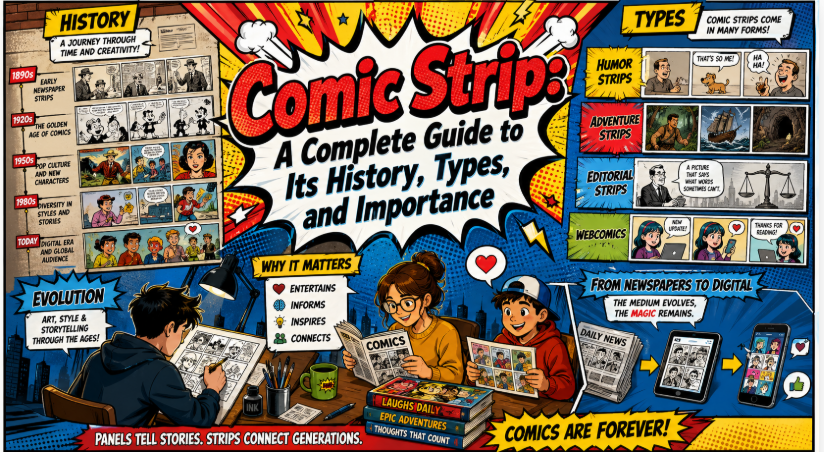
Comic strips have a long history that dates back to the late 19th century. Early versions appeared in newspapers as a way to entertain readers.
One of the earliest famous comic strips is “The Yellow Kid,” which appeared in American newspapers in the 1890s. It is often considered the beginning of modern comic strip culture.
As time passed, comic strips became more popular and started appearing in newspapers around the world. During the 20th century, they became a regular feature in daily newspapers.
Famous comic strips like Peanuts, Garfield, and Calvin and Hobbes gained global popularity and are still loved today.
Structure of a Comic Strip
A typical comic strip has a simple structure:
Panels
Panels are individual boxes that contain a part of the story. Each panel shows a moment in time.
Characters
Characters are the main focus of the comic strip. They express emotions, speak dialogue, and perform actions.
Dialogue
Text is usually written in speech bubbles or captions. It helps explain what the characters are saying or thinking.
Story Flow
Comic strips usually follow a short and clear storyline. They often end with a punchline, twist, or conclusion.
Types of Comic Strips
Comic strips come in many different styles and categories.
Humor Comic Strips
These are the most common type. They focus on jokes, funny situations, and light-hearted stories.
Adventure Comic Strips
These strips tell action-based stories with heroes, challenges, and exciting events.
Editorial Comic Strips
These are used to express opinions on social or political issues. They often include satire or commentary.
Daily Life Comic Strips
These focus on everyday situations, relationships, and relatable experiences.
Educational Comic Strips
These are used in schools and educational content to explain concepts in a simple visual way.
Why Comic Strips Are Popular
Comic strips are popular for several reasons:
Easy to Read
They are short and simple, making them easy for anyone to understand.
Visually Engaging
The combination of images and text makes them more interesting than plain writing.
Quick Entertainment
Comic strips can be read in just a few minutes, making them perfect for busy readers.
Universal Appeal
They are enjoyed by people of all ages, from children to adults.
Famous Comic Strips Around the World
Several comic strips have become globally famous over the years.
Peanuts
Created by Charles M. Schulz, Peanuts is one of the most iconic comic strips. It features characters like Charlie Brown and Snoopy and focuses on everyday life and emotions.
Garfield
Garfield is a humorous comic strip about a lazy cat who loves food and hates Mondays. It is known for its simple humor and relatable themes.
Calvin and Hobbes
This comic strip explores imagination, friendship, and childhood adventures. It is loved for its creativity and deep storytelling.
These comic strips have influenced generations of readers and artists.
Role of Comic Strips in Newspapers
Comic strips have been an important part of newspapers for decades. They provide readers with a quick source of entertainment.
Many people read comic strips daily as part of their routine. They help break the seriousness of news content and add humor or light storytelling.
Even in the digital age, many newspapers continue to publish comic strips online.
Comic Strips in Education
Comic strips are also used in education to make learning more engaging. Teachers use them to explain complex ideas in a simple and visual way.
Educational comic strips can help students understand topics in subjects like science, history, and language arts.
They improve reading skills, creativity, and comprehension.
Digital Evolution of Comic Strips
With the rise of the internet, comic strips have moved beyond newspapers. Today, they are widely available on websites, social media, and mobile apps.
Digital comic strips allow creators to reach a global audience instantly. They also allow for interactive and animated versions of traditional strips.
This digital shift has made comic strips more accessible and popular than ever before.
How Comic Strips Are Created
Creating a comic strip involves several steps:
Idea Development
The creator comes up with a concept or story idea.
Sketching
Characters and scenes are drawn in rough form.
Inking
The final lines are drawn more clearly.
Adding Text
Dialogue and captions are added to complete the story.
Publishing
The finished comic strip is published in print or digital form.
Benefits of Reading Comic Strips
Comic strips offer several benefits:
Improves Reading Skills
They help readers understand stories through both text and visuals.
Boosts Creativity
They encourage imagination and creative thinking.
Provides Relaxation
Reading comic strips is a fun and stress-free activity.
Enhances Understanding
Visual storytelling makes complex ideas easier to understand.
Comic Strips vs Comic Books
Although they are related, comic strips and comic books are different.
Comic Strips
- Short stories
- Usually 1 to 4 panels
- Focus on one idea or joke
- Published in newspapers or online
Comic Books
- Longer stories
- Multiple pages
- More detailed storytelling
- Sold as separate books
Both forms are important in the world of comics.
The Future of Comic Strips
The future of comic strips looks bright, especially with digital growth. More creators are publishing online, and new tools allow for animated and interactive storytelling.
Social media platforms have also made it easier for comic strip artists to gain popularity.
As technology continues to evolve, comic strips will likely become more dynamic and widely accessible.
Conclusion
Comic strips are a timeless form of storytelling that combines art and writing in a simple yet powerful way. They entertain, educate, and inspire readers of all ages.
From newspapers to digital platforms, comic strips have remained relevant for over a century. Their ability to deliver quick, meaningful stories ensures they will continue to be popular in the future.
Whether funny, serious, or educational, comic strips are an important part of visual storytelling culture.