
Introduction
A comic book is one of the most engaging and creative forms of storytelling. Combining artwork with written narratives, comic books bring stories to life in a way that is both visually appealing and easy to follow. From superheroes saving the world to emotional personal stories, comic books offer something for everyone.
Over the years, comic books have grown from simple entertainment for children into a powerful storytelling medium enjoyed by people of all ages. Today, they influence movies, television shows, games, and even fashion.
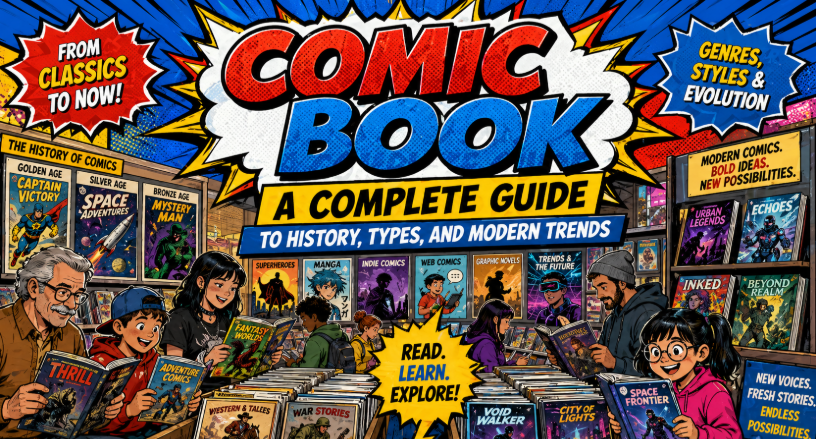
In this article, we will explore everything about comic books, including their history, types, popularity, and future trends.
What is a Comic Book?
A comic book is a publication that tells a story through a combination of illustrations and text. The story is usually presented in panels, with speech bubbles and captions guiding the reader through the narrative.
Comic books can be short or long, simple or complex, and are available in both print and digital formats. They cover a wide range of genres, including action, romance, horror, fantasy, and comedy.
A Brief History of Comic Books
Comic books have a long and interesting history. Early forms of comics can be traced back to newspaper strips in the late 19th and early 20th centuries.
The modern comic book industry began in the 1930s, with the introduction of superhero characters. One of the earliest and most famous superheroes is Superman, who first appeared in 1938. This marked the beginning of what is often called the Golden Age of comic books.
During the following decades, comic books continued to evolve. New genres were introduced, and storytelling became more complex. Characters like Batman and Spider-Man became global icons.
Types of Comic Books
Comic books come in many different styles and formats. Here are some of the most popular types:
Superhero Comics
These are the most widely known comic books. They focus on heroes with special abilities who fight villains and protect society. Publishers like Marvel Comics and DC Comics dominate this category.
Graphic Novels
Graphic novels are longer and more detailed than regular comic books. They often tell complete stories and may explore deeper themes.
Manga
Manga refers to Japanese comic books. They are usually read from right to left and cover a wide range of genres, from action to romance.
Indie Comics
Independent comics are created by smaller publishers or individual artists. They often feature unique storytelling and experimental art styles.
Webcomics
Webcomics are published online and are easily accessible to readers worldwide. They are becoming increasingly popular due to their convenience.
Why Comic Books Are So Popular
Comic books have remained popular for many reasons:
Visual Storytelling
The combination of images and text makes stories more engaging and easier to understand.
Wide Variety of Genres
There is a comic book for every interest, whether you enjoy action, drama, humor, or mystery.
Relatable Characters
Many comic book characters face challenges similar to real-life situations, making them easy to connect with.
Cultural Influence
Comic books have a strong impact on modern culture, especially through movies and television adaptations.
The Role of Comic Books in Entertainment
Comic books are no longer limited to printed pages. They play a major role in the entertainment industry.
Many blockbuster movies are based on comic book characters. Studios like Marvel Studios have created entire cinematic universes inspired by comics.
These adaptations have introduced comic book stories to a global audience, increasing their popularity even further.
How Comic Books Are Made
Creating a comic book involves several steps and professionals:
Writer
The writer creates the story, dialogue, and script.
Artist
The artist draws the characters, backgrounds, and panels.
Inker and Colorist
These professionals add details and colors to the artwork.
Letterer
The letterer adds text, including speech bubbles and captions.
Editor
The editor ensures the story is clear and consistent.
This collaborative process results in a finished comic book that readers can enjoy.
Digital vs Print Comic Books
With advancements in technology, comic books are now available in both print and digital formats.
Print Comics
These are physical copies that readers can collect and store. Many collectors prefer print versions for their value and feel.
Digital Comics
Digital comics can be read on devices like smartphones and tablets. They are convenient and often more affordable.
Both formats have their advantages, and many readers enjoy using both.
Benefits of Reading Comic Books
Reading comic books offers several benefits:
Improves Reading Skills
The combination of text and images helps readers understand stories more easily.
Boosts Imagination
Comic books encourage creativity and imagination.
Reduces Stress
Reading comics can be a fun and relaxing activity.
Educational Value
Some comic books teach history, science, and important life lessons.
Comic Book Collecting
Collecting comic books is a popular hobby. Some collectors focus on rare issues, while others collect based on their favorite characters or series.
The value of a comic book depends on factors such as condition, rarity, and demand. Certain issues can become highly valuable over time.
Proper storage and care are important for maintaining the quality of comic books.
Comic Book Events and Communities
Comic book fans often come together through events and communities. These gatherings allow fans to share their interests and meet creators.
One popular event is Free Comic Book Day, where readers can receive free comics and explore new titles.
There are also conventions where fans can participate in discussions, buy merchandise, and enjoy cosplay.
The Future of Comic Books
The comic book industry continues to evolve. New technologies and platforms are changing how comics are created and consumed.
Digital platforms are making comics more accessible to global audiences. At the same time, print comics remain popular among collectors.
Diversity in storytelling is also increasing, with more voices and perspectives being represented. This makes comic books more inclusive and relevant.
Conclusion
A comic book is more than just entertainment. It is a powerful storytelling medium that combines art and writing to create unforgettable experiences.
From their early beginnings to their modern influence on global entertainment, comic books have come a long way. They continue to inspire creativity, connect people, and bring stories to life.
Whether you are a new reader or a long-time fan, there is always something new to discover in the world of comic books.