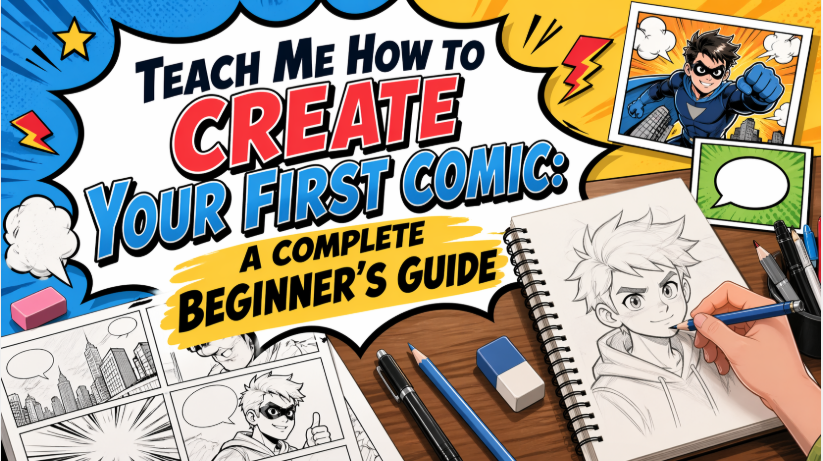

Teach Me How to Create Your First Comic
Creating your first comic can feel challenging, especially if you have never worked with visual storytelling before. Many beginners search for guidance with phrases like “teach me how to create my first comic,” and the good news is that the process is easier than it seems when broken into clear steps.
This comprehensive guide will walk you through everything you need to know, including idea creation, character development, drawing basics, storytelling, and publishing. Whether you want to create comics as a hobby or build a professional career, this guide will help you get started with confidence.
Understanding What a Comic Is
A comic is a storytelling format that combines visuals and text arranged in a sequence. Unlike traditional writing, comics depend on images to communicate emotions, actions, and narrative flow.
Key Elements of a Comic
- Panels: Boxes that contain scenes
- Characters: The people or figures in the story
- Dialogue: Conversations shown in speech bubbles
- Visual storytelling: Images that carry the narrative
Types of Comics
- Comic strips: Short and usually humorous
- Graphic novels: Long-form storytelling
- Webcomics: Published online
- Manga: A style of comics originating from Japan
Understanding these basics will help you structure your work effectively.
Start With a Simple Idea
Every comic begins with an idea. Beginners often make the mistake of trying to create complex stories, but simple concepts work best when starting out.
How to Develop an Idea
Ask yourself three important questions:
- Who is the main character?
- What do they want?
- What problem do they face?
Example
A student finds a mysterious notebook that brings drawings to life. This simple concept can be expanded into a full story.
Keep your idea clear and focused. You can always add complexity later.
Create Your Characters
Characters are the foundation of your comic. Readers connect with strong and relatable characters.
Tips for Creating Characters
- Start with one or two main characters
- Give them distinct personalities
- Keep designs simple for easier drawing
Basic Character Profile
- Name
- Appearance
- Personality traits
- Goals and motivations
Consistency in character design is important, especially when drawing multiple panels.
Build a Simple Story Structure
A strong story keeps readers engaged. You do not need an advanced plot to create a good comic.
Basic Story Structure
Beginning
Introduce the characters and setting
Middle
Present the conflict or challenge
End
Resolve the situation
This structure works well for beginners and helps maintain clarity.
Learn Comic Panel Layout
Panels guide the reader through the story. A well-planned layout improves readability and flow.
Common Panel Styles
- Single panel for short messages
- Grid layout for organized storytelling
- Large panels for important moments
Layout Tips
- Avoid overcrowding panels
- Maintain a clear reading direction
- Use space wisely
Good panel design enhances storytelling without confusing the reader.
Sketch Your Comic
Start with rough sketches instead of detailed drawings. This stage is known as thumbnailing.
What to Focus On
- Position of characters
- Scene composition
- Dialogue placement
Do not worry about perfection at this stage. The goal is to plan your comic visually.
Add Dialogue and Text
Dialogue adds depth to your story and helps express character emotions.
Best Practices
- Keep sentences short and clear
- Use natural language
- Avoid too much text in one panel
Types of Text in Comics
- Speech bubbles for conversations
- Thought bubbles for inner thoughts
- Narration boxes for storytelling
Balancing text and visuals is key to effective communication.
Inking and Refining Your Artwork
After sketching, the next step is refining your drawings.
Steps
- Outline your sketches with clean lines
- Remove unnecessary marks
- Add details to characters and backgrounds
This stage makes your comic look polished and professional.
Adding Color
Color is optional but can enhance the visual appeal of your comic.
Tips for Beginners
- Use simple color schemes
- Keep colors consistent
- Avoid overcomplicating the design
Black and white comics can also be very effective, especially for beginners.
Choose the Right Tools
You can create comics using traditional or digital tools.
Traditional Tools
- Pencil
- Paper
- Ink pens
Digital Tools
- Drawing tablet
- Free software for beginners
- Professional design software
Choose tools that match your comfort level and budget.
Publishing Your Comic
Once your comic is complete, the next step is sharing it with an audience.
Publishing Options
- Online platforms
- Social media
- Personal websites
- Print publishing
Start with simple platforms and expand as you gain experience.
SEO Tips for Comic Creators
If you want your comic to reach a wider audience, search engine optimization is important.
Keyword Ideas
- teach me how to create a comic
- beginner comic guide
- how to draw comics step by step
Optimization Tips
- Use keywords in titles and headings
- Write clear descriptions
- Stay consistent with content
Proper SEO can help your comic gain visibility online.
Common Mistakes to Avoid
Beginners often face similar challenges. Being aware of these mistakes can help you improve faster.
Avoid These Mistakes
- Making the story too complicated
- Trying to achieve perfection immediately
- Inconsistent character design
- Giving up too early
Focus on learning and improving rather than perfection.
Practice and Improvement
Creating comics is a skill that improves with time and practice.
Ways to Improve
- Draw regularly
- Study other comics
- Experiment with styles
- Seek feedback
Consistency is more important than talent when starting out.
Final Thoughts
If you have been searching for guidance with “teach me how to create your first comic,” this guide provides a clear path to get started.
The most important step is to begin. Your first comic may not be perfect, but it will teach you valuable skills and build your confidence.
Conclusion
Creating your first comic is a rewarding experience that combines creativity and storytelling. By following the steps in this guide, you can turn your ideas into a visual story and share it with others.
Start simple, stay consistent, and continue learning. Over time, your skills will improve, and your comics will become more engaging and professional.